
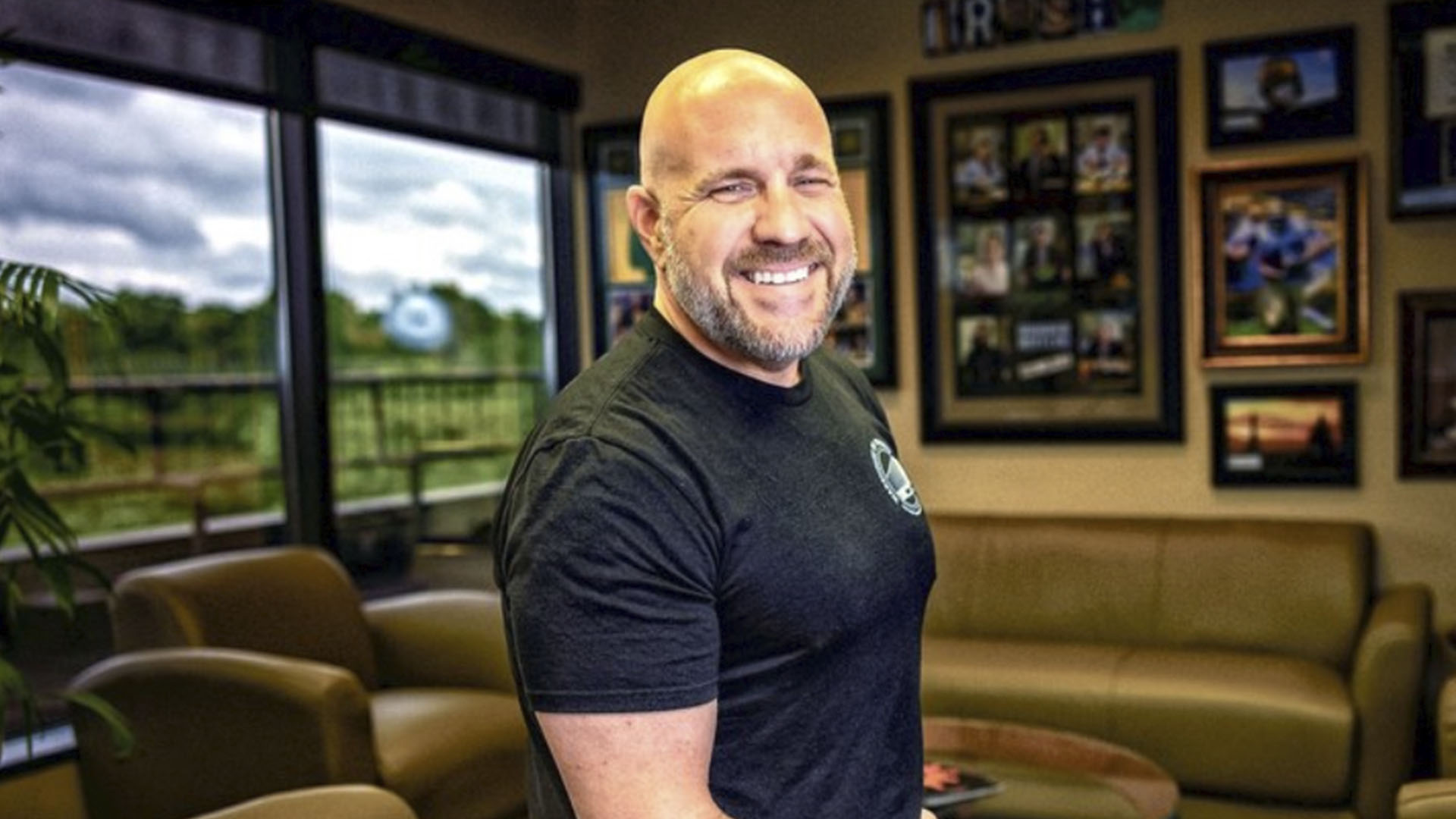
For Jonathan N. Brooks, business was never meant to be complicated. “When you strip away the jargon and complexity, it’s about solving real problems for real people, fast.” That mindset has enabled him to turn a reactive, time-sensitive storage challenge into a scalable operating model. As CEO of Warehouse on Wheels, he’s taken a mobile trailer storage platform from a regional footprint into a multi-country operation serving manufacturers, distributors, retailers, and third-party logistics providers. The success has been in building a culture where accountability is embedded at every level.
Brooks’s leadership philosophy was forged early in his career in finance, including his time at Arthur Andersen. Watching the collapse of a global institution left a lasting impression and exposed how fragile even the largest organizations can be when complexity obscures accountability.
That experience carried into his work across seven private equity-backed companies, where operational simplicity was a requirement for survival and growth. Brooks internalized that lesson and applied it to operations, shifting from financial oversight to building executing teams that could move quickly and decisively. “Scale exposes every gap in your system,” he says. “You either fix accountability at the frontline or you spend all your time managing exceptions from the top.” At Warehouse on Wheels, that philosophy translates into lean frameworks, clear performance metrics, and a decentralized structure that pushes decision-making closer to the customer.
Building Teams That Own Outcomes
Brooks’s approach to leadership centers on what he calls “extreme ownership” and “culture accountability,” reinforcing his belief that, at scale, empowered teams are an absolute operational necessity. “You cannot run 40-plus locations across three countries by funneling every decision through the top,” he says. Brooks builds teams that operate with autonomy, aligned to clear objectives and measurable outcomes. Each location leader is expected to think and act like the CEO of their market.
This model depends on clarity and tying metrics to outcomes helps this. Roles are defined with precision, and expectations are unambiguous, but the defining element is accountability. “There are no excuses for failure here,” Brooks says. “When something breaks, the question is not who is to blame. It is who is going to solve it.” That mindset is reinforced through direct coaching and operational immersion.
Discipline Over Activity
One of the most persistent challenges Brooks identifies is the tendency for organizations to reward visible effort rather than progress. “Stop rewarding people for just showing up,” Brooks says. “Execution means moving the business forward. Everything else is noise.”
His framework for impactful execution is both structured and flexible: leadership defines the objective, but individuals determine how to achieve it. Brooks describes it as “climbing a mountain with a flag at the top.” The destination is fixed but the path is not, and that marriage between vision and autonomy fosters entrepreneurial execution while maintaining accountability. It also, most importantly, reinforces a scalable culture. Teams are not dependent on constant oversight. They are equipped to act, adjust, and deliver outcomes independently.
Human-First Leadership in an Automated Industry
As logistics becomes increasingly automated, Brooks maintains that human-first leadership is more critical than ever. “Automation only speeds up a bad process if discipline is not already in place,” he says. “The final outcome is always human.” It also reinforces the importance of hiring for accountability. At Ware house on Wheels, Brooks looks for individuals who take responsibility for both successes and failures.
This emphasis on human ownership, combined with operational simplicity, creates a resilient model that allows the organization to adapt to complexity without becoming defined by it. Brooks’s leadership model reflects a broader lesson for early-stage companies and established enterprises alike. Growth comes from removing friction. “Leading with extreme ownership,” Brooks says, “means owning the outcome, no matter the circumstances.” That principle, combined with disciplined execution and a human-first approach, has allowed him to build a scalable culture that performs under pressure.
Follow Jonathan N. Brooks on LinkedIn or visit his website for more insights.