On a narrow mountain road in Central Appalachia, a mobile clinic pulls into a church parking lot just after sunrise. By midmorning, patients are lined up for primary care visits, dental screenings, lab work, and prescriptions they otherwise might not receive for months, if at all. This is not an emergency response. It is The Health Wagon’s deliberately designed healthcare system, built to function where traditional models fall short.
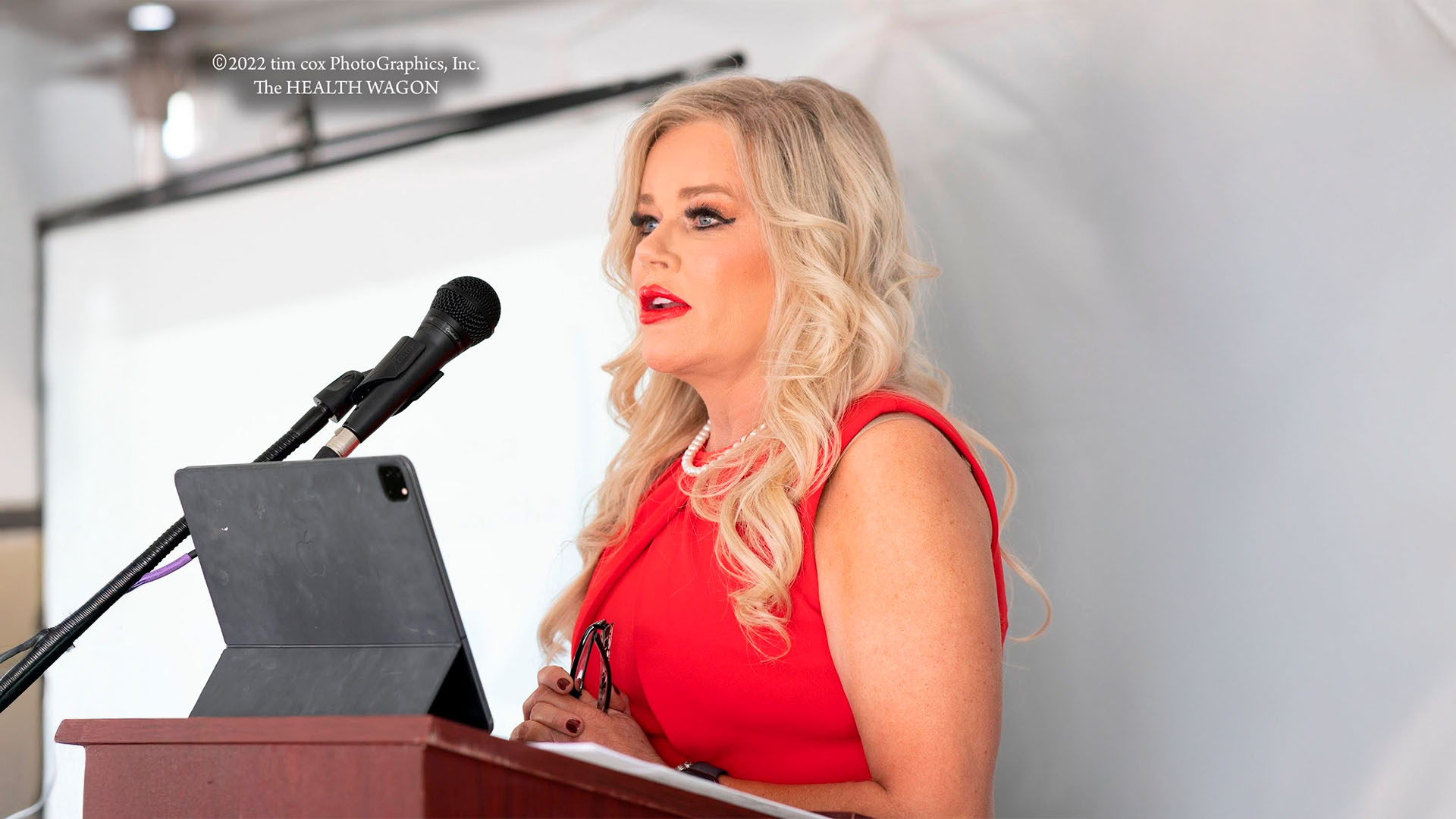
“If people can’t reach care, afford care, or trust the system, then the system has already failed them,” says Dr. Teresa Owens Tyson, DNP, FAANP. For more than 30 years, she has dedicated her life to service at The Health Wagon, the nation’s oldest mobile health clinic, where she currently serves as President and CEO. Her teams deliver high-quality, affordable, and accessible healthcare to rural communities by designing systems that account for geography, poverty, and trust.
Access as the Foundation of Rural Care
The Health Wagon operates as a nurse-practitioner-led health system combining mobile clinics, stationary sites, a free and charitable pharmacy, dental services, and telehealth. In 2024 alone, it delivered more than $28 million in free care across Southwest Virginia. “Clinical excellence alone is not enough if people cannot physically get to you or afford the care,” Dr. Tyson says. In Appalachia, transportation barriers, provider shortages, limited broadband access, and persistent poverty turn manageable conditions into emergencies. Health outcomes lag because care arrives too late or not at all.
Rather than centralizing services and expecting patients to adapt, The Health Wagon’s model reverses the equation. Mobile units go where people are, and specialty care is delivered through pop-up clinics and telehealth partnerships. “We design care around the community, not the clinic,” says Dr. Tyson. “If you keep doing healthcare the same way, you will keep getting the same outcomes.”
Building Care Models Around Appalachian Life
Dr. Tyson’s approach emerged from proximity to the problem. Raised in a coal miner’s family in Appalachia, she trained first as a nurse under the mentorship of Sister Bernie Kenny, founder of The Health Wagon, before becoming a nurse practitioner and earning a Doctor of Nursing Practice. Care teams at The Health Wagon are interdisciplinary and nurse-led, bringing together nurse practitioners, pharmacists, dental professionals, behavioral health providers, and social service partners. “Outreach becomes not just about delivering care, but about building relationships,” Dr. Tyson says, pointing to the generational distrust of institutions that exists in many Appalachian communities.
The impact is most visible in chronic disease management. Patients with diabetes often arrive with blood sugar levels in the 500s or 600s after years of delayed treatment. By providing medication, education, monitoring tools, labs, and follow-up care at no cost and with no travel barriers, The Health Wagon has achieved an average hemoglobin A1C of 7.4 among its diabetic patients. “Once you remove the barriers, you get optimal outcomes,” Dr. Tyson says, challenging the assumption that poor health outcomes reflect patient disengagement rather than systemic failure.
Innovation Without Losing the Human Connection
The Health Wagon has partnered with the University of Virginia for more than three decades to deliver specialty and subspecialty care remotely, eliminating the need for six-hour drives through the mountains. In 2015, it was a pioneering partner on the first FAA-approved drone delivery of medications in the United States, a project now recognized by the Smithsonian’s National Air and Space Museum, and the drone is housed there.
Dr. Tyson views artificial intelligence as a potential equalizer for rural healthcare if implemented intentionally. AI-supported diagnostics can enable earlier detection of conditions such as diabetes, kidney disease, and cervical cancer, while decision-support tools help clinicians focus their limited time where it matters most. “AI will never replace relationship, trust, or compassionate care,” Dr. Tyson says. The opportunity lies in using technology to support clinicians, not supplant them. Ethical deployment remains critical. Human-centered design, transparency, and alignment with community values will determine whether innovation narrows or widens existing disparities.
Collaboration as the Engine of Scale and Longevity
No single organization can address rural health disparities alone. Dr. Tyson has built an extensive network of partnerships spanning more than 50 universities, healthcare agencies, faith-based organizations, and hospital systems. That collaborative infrastructure is most visible during the Move Mountains Medical Mission, a three-day annual outreach that has traditionally been the largest health event of its kind in the United States, providing eye, dental, and medical care.
Thousands line up for free care, sometimes days in advance. International observers are often stunned by the scene. “People are shocked that this happens here,” Dr. Tyson says. “But it shows what’s possible when collaboration replaces fragmentation.” As rural healthcare faces mounting pressure nationwide, The Health Wagon’s work shows that systems designed around access, trust, and continuity can produce measurable outcomes even in the most resource-constrained settings. For Appalachia, mobilized healthcare outreach is a long-term strategy for equity.
Follow Dr. Teresa Owens Tyson on LinkedIn and learn more about her work by visiting her website.