
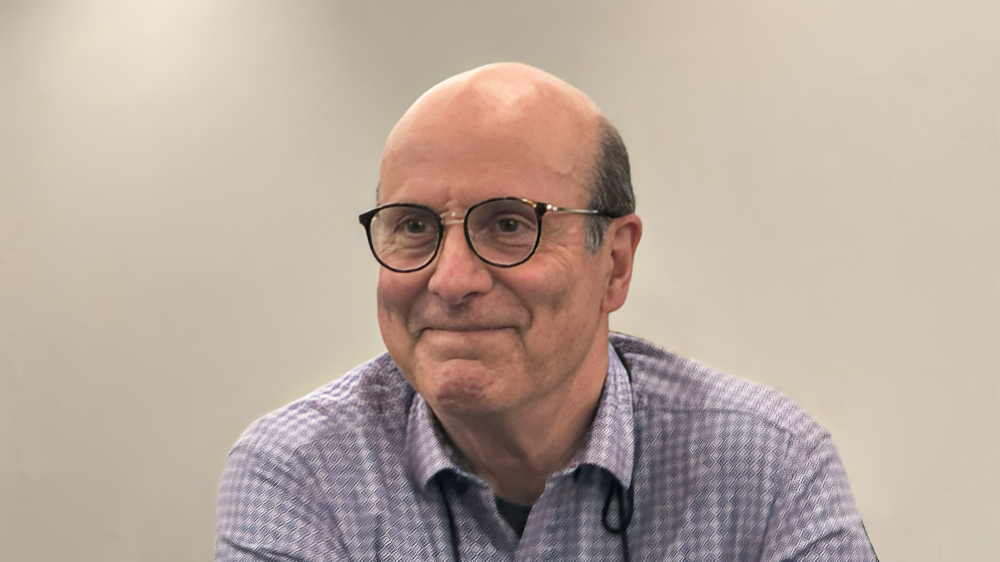
Nowadays, every organization is in a race to automate its technical tasks. But knowingly or unknowingly, they are all playing a big gamble. When software begins to assist in analysis, drafting, and decision-making, then what remains for a leader to do? The answer is the very things that machines cannot do, such as sensing the mood of a gathering, handling an unpleasant conversation gracefully, or picking up on whether a capable employee is losing heart. Dr. Luigi A. Pecoraro has spent 25 years training leaders across the corporate and academic worlds. In his view, Emotional Intelligence is no longer an extra trait, but has become a fundamental condition of doing work. The problem is that most companies view it merely as a temporary workshop, not a formal skill. Senior executives still believe deep down that offices run solely on logic and intellect. The truth is that this is not the case. The cost of this mindset has to be borne in the form of failed promotions and teams suffering from chaos.
The Evidence That Ended the Debate
Knowing its history is important so that one knows this is not some traditional moral advice. Substantial research was conducted on social and emotional intelligence in the 1970s, 1980s, and 1990s. Then in 1995, Daniel Goleman’s Emotional Intelligence: Why It Can Matter More Than IQ introduced the term to a global audience. But this theory gained real weight when solid data emerged in its favor. Goleman turned to Dr. Richard Boyatzis, whose research identified a clear and measurable link between emotional intelligence and performance. Pecoraro met Boyatzis in 2005 at a training workshop, and that meeting proved decisive for him. According to the research, people whose behavior remains emotionally balanced produce twice as good results compared to average employees. And this proved true in every field. In his own words: “We’re talking like in software development, not even like nursing.”
Pecoraro had been saying this for ten years based solely on his feeling, but the data completely changed the direction of the debate. He explains: “I no longer felt like I had to defend my position, but that I could assert it with evidence.” In reality, it has four fundamental pillars:
- Awareness of one’s own emotions.
- Understanding others’ emotions.
- Self-control.
- Empathy.
In some theories, a dozen branches are made out of it, but according to Pecoraro, those are unnecessarily complicated. Empathy has its own stages:
- The first is that you imagine a state that you yourself have never gone through.
- The second stage is that you understand another’s situation with the help of some past experience of your own.
- The third and rarest stage is that you feel what the other person is enduring.
Leaders do not need such depth in everything. They only need enough connection so that people can relate.
Why Do Star Performers Fail As Soon As They Become Managers?
The biggest example of this is seen in the difference between performance and promotion, and most companies lose out right here. Performing exceptionally on an individual level does bring attention and credibility that you know the work, but it never means that you are also ready for leadership. As a career progresses, challenges shift away from technical problems toward human behaviors. Pecoraro says: “The minute you’re moving to management and leadership, it’s more about the people than it is about your technical expertise.” In his view, leadership is the name of balance between work and human beings. Handling tasks properly is management, and leading people is leadership. If the balance is disrupted, failure is certain. A leader who keeps an eye only on tasks, in his words, wrecks everything like a “bull in a china shop.”
These qualities are not innate, and this very point often stays beyond the comprehension of top executives. Pecoraro cites the example of the head of an oil company, whose assessment placed the empathy column at the very end, meaning 34th place. He was an engineer of the old school; for him, this matter was completely unnatural. But he had to accept that understanding others is a mandatory condition for creating influence. According to Pecoraro: “It’s not just persuasion, it’s not just your gift of charisma,” and taking the point further, he says: “It’s connecting with them on an emotional level.” It is also possible to evaluate this ability: 360-degree feedback provides clear data on how well a person meets these behaviors. In this way, promotion decisions are based on solid grounds, rather than personal preference.
The Importance of Human Connection in a High-Tech Era
The biggest stumbling block for senior leaders is that they refuse to acknowledge the existence of emotions in offices. Only intellect and solutions are discussed. Consequently, they get trapped in a routine where, in the pursuit of work and speed, room for human beings disappears. Pecoraro gives a clear-cut response to this. Human emotions are like an open book; every employee immediately senses what the room’s atmosphere is like, whether someone speaks or not. He says: “If they can’t identify the emotion, they at least know you’re emotional.” The solution to this is far easier than they think. Merely asking, “You look a bit troubled, is everything alright?” is a good signal; it is not a psychotherapy session. However, this attention requires time and calmness. A leader who remains under immense stress all the time is put into a defensive posture by their nervous system, where they cannot connect with anyone from the heart.
Artificial intelligence (AI) has not reduced this need, but rather increased it further. For this, Pecoraro has been using a formula for years: “High-Touch, High-Tech.” Technology makes work faster and easier, but humans nonetheless come to work with their emotions, desires, and distinct temperaments. He himself takes the support of AI to gather strategic ideas. However, to evaluate the results, only critical thinking and human experience prove useful. He says: “It’s still people who drive the bus.” Now companies need to create an environment where these behaviors are valued, and leadership will have to start this through its own action. For tomorrow, his advice is to combine emotional intelligence with the ability to learn new things quickly. He insists: “You’re going to need a pretty decent level of emotional intelligence to collaborate and problem solve in those kinds of situations.”
For more insights regarding leadership, emotional intelligence, and building high-performing teams, follow Dr. Luigi A. Pecoraro on LinkedIn.