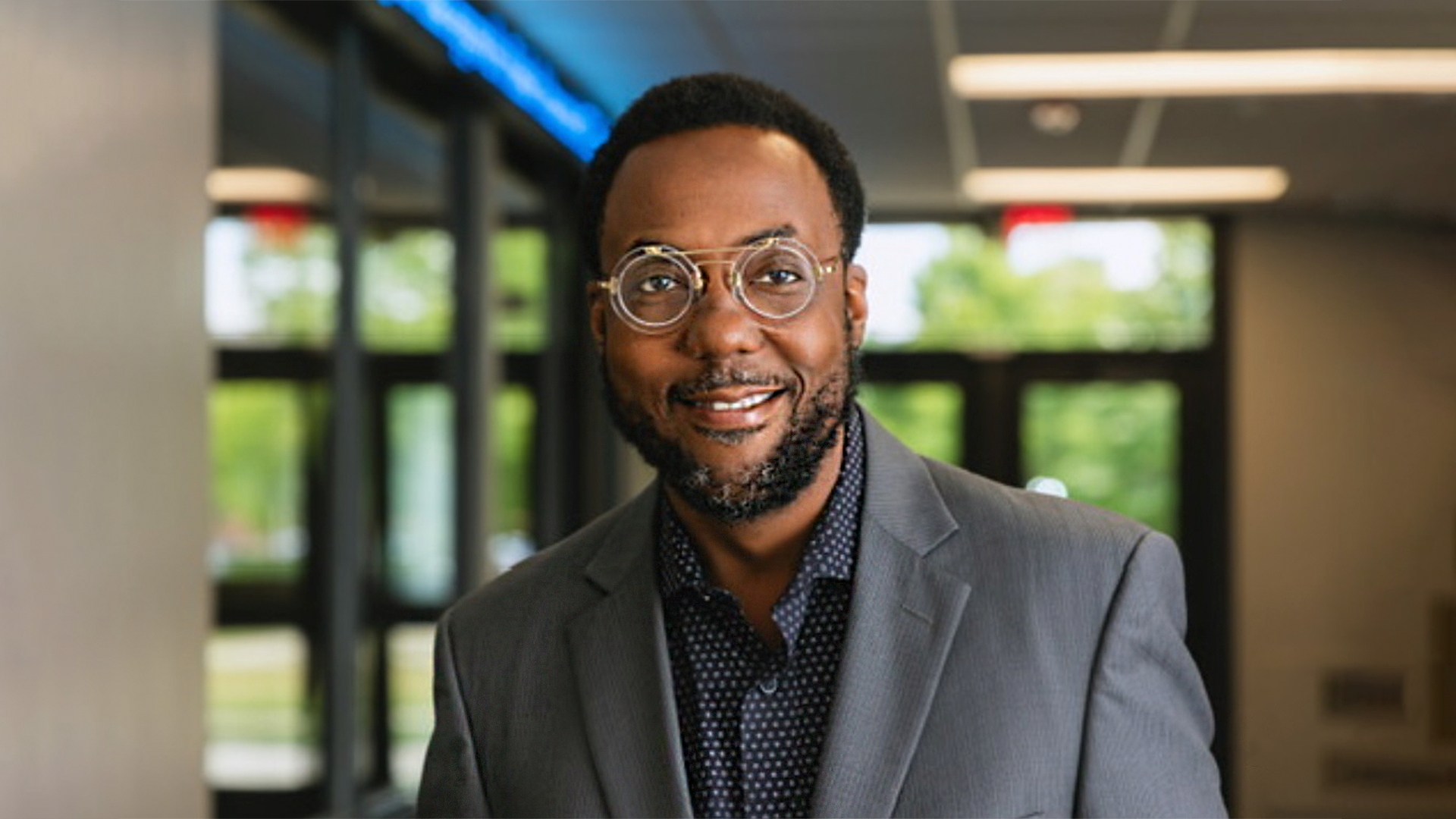

Enterprise AI has an arithmetic problem, and it is not a technical one. McKinsey’s 2026 research found that 80 percent of respondents reported individual productivity improvements from AI, while only 37 percent reported any earnings before interest and tax impact, and just 6 percent qualified as high performers. PwC’s 29th Global CEO Survey put the gap even more starkly: 12 percent of chief executive officers (CEOs) reported AI delivering both revenue and cost benefits, and 56 percent reported no significant financial benefit at all. The technology works. The translation does not. David D. Ellison, Chief Data Scientist for Lenovo’s Infrastructure Solutions Group, argues that the missing skill is not deeper engineering talent but leaders who can convert technical capability into capital allocation language, and that the companies still debating model architecture in the boardroom are losing a race they have not yet realized they entered.
The Unit Of Conversation Has Changed
Ellison draws a line that most technical organizations have not internalized. “A technologist tells the CEO what the AI can do. An AI leader tells the CEO what the business can now do because of the AI,” he says. The distinction sounds cosmetic. It is not. It determines whether an AI function sits inside the technology budget or inside the strategy conversation, and those two rooms have entirely different standards of proof.
His own scaling experience sharpened the point. Taking an AI business from roughly $14 million to $1.7 billion required a shared language across technical teams, sales, partners, and customers, and that language turned out to be business value rather than capability. “I have seen technically impressive projects fail because nobody could articulate the economics, and I have seen relatively straightforward AI applications become strategically important because they solved a painful business problem,” he says. The instruction he now gives his teams is blunt: do not bring a use case, bring a business case, complete with an owner, a baseline, measurable key performance indicators, a deployment path, and a definition of what happens if it works. BCG found in 2026 that more than half of CEOs cited the missing link between AI and the profit and loss (P&L) as a barrier to scaling, while only 14 percent had defined P&L impact for every AI initiative. The gap Ellison describes is the one the data keeps measuring.
How AI Leaders Lose The Room
Most presentations fail in a predictable way. A CEO asks how the company should think about agents, and the technical leader answers with orchestration frameworks, context windows, and benchmark comparisons. Those are real issues. They are also answers to a question nobody asked. “Never make the executive translate the technology into the business impact. That is your job,” Ellison says. “If the CEO leaves a presentation knowing which model you used but not knowing what decision you want them to make, you probably lost the room.”
His second failure mode is quieter and more expensive: confusing a successful demonstration with a successful business outcome. A demo proves the technology can do something. It says nothing about adoption, workflow integration, reliability at scale, or unit economics. Boards have started noticing. PwC’s 2026 Corporate Directors Survey found 71 percent of directors believe their boards need stronger AI skills, but the more telling number is that 82 percent rated the information connecting AI outcomes, risks, and business performance as fair, poor, or not provided. Directors are not asking for more AI material. They are asking for better translation. Ellison structures executive conversations in three levels, business outcome first, then economics and risk, then technical mechanism, with the detail pulled in by the decision rather than pushed in by the technologist. He also resists the pressure to overstate certainty. Credibility, in his reading, rises when a leader can say an assumption is uncertain and then structure the investment to preserve optionality.
Agentic AI Turns This Into An Operating Model Problem
The stakes climb sharply as AI shifts from recommending work to performing it. Agentic systems raise questions no model benchmark answers: What is the agent authorized to do? Which systems can it access? How much can it spend? When it escalates to a human, who is accountable for its errors? “Those are not model questions. They are operating-model questions,” Ellison says. His conclusion is that the most valuable fluency ahead is workflow economics and organizational design: the ability to read a business process the way a chief operating officer reads it – understanding decision rights, bottlenecks, handoffs, exceptions, and incentives before deciding where agents add speed and where humans add judgment.
Two disciplines follow. The first is cost per completed business outcome rather than cost per token, since an agent may make multiple model calls, retry failed steps, and invoke other agents in ways traditional application budgeting never had to model. The second is what Ellison calls governed autonomy. “The real leadership question is: ‘Where do we intentionally place the human in the system based on risk, value, and accountability?'” Autonomy becomes a business-and-risk decision, not a function of what the technology is capable of. The evidence suggests few organizations have done this work. Deloitte found that 84 percent of companies had not redesigned jobs around AI capabilities, and only about one in five had a mature governance model for autonomous agents. IBM’s 2026 research found just 11 percent of technology leaders felt fully prepared for the scale of agent deployment expected in the following year, while organizations that engineered governance directly into AI systems deployed far more agents and reported stronger operating performance. Ellison’s read on where the role is heading is unsentimental. “I don’t think the future chief AI officer wins because he or she knows the most about AI,” he says. “The leader wins because they can connect technological capability to capital, strategy, organizational change, and measurable results.”
Follow David D. Ellison on LinkedIn for more insights on enterprise AI strategy, agentic operating models, and responsible AI leadership.