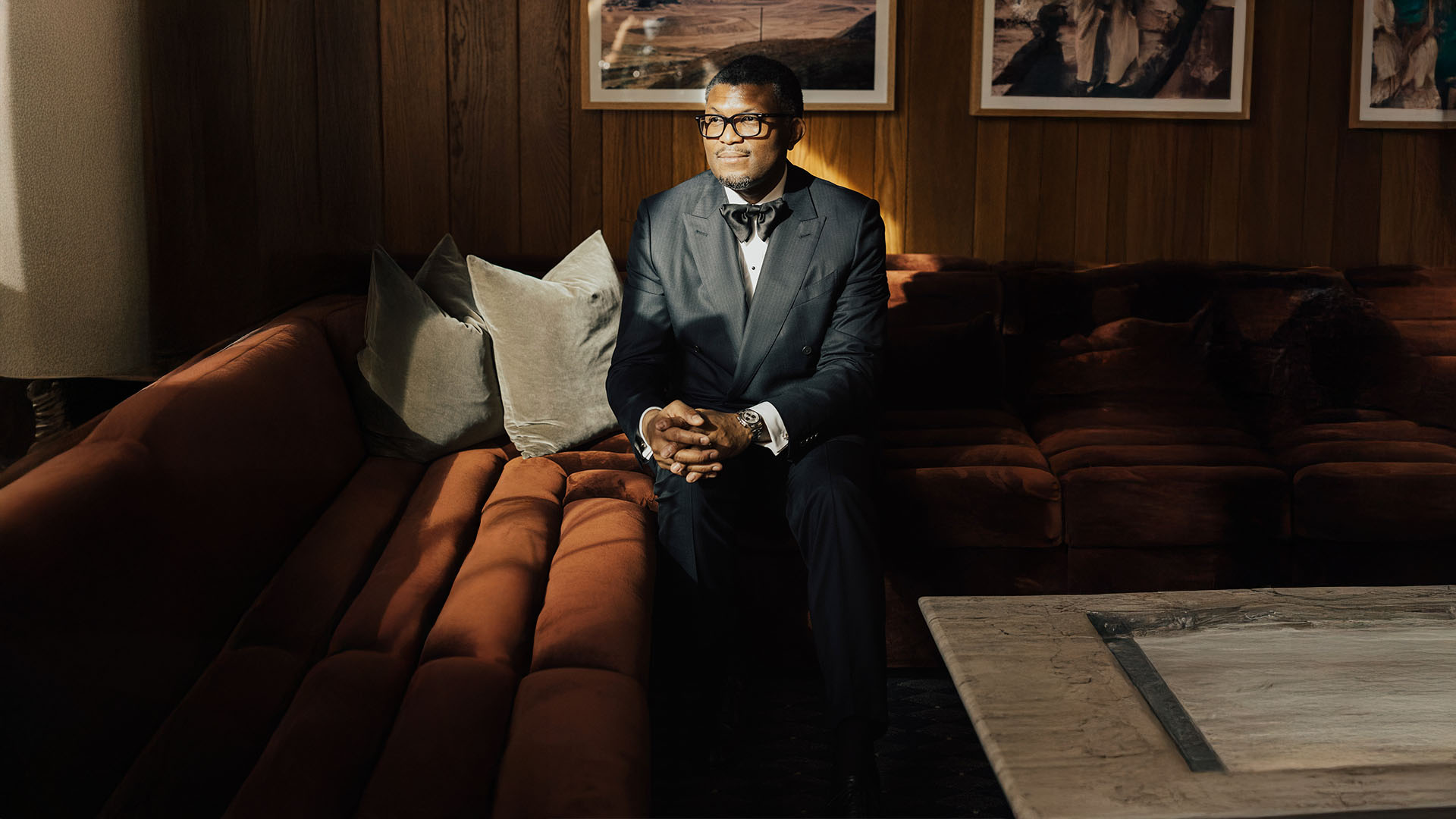

What does it take to turn a scientific discovery into a commercial success? For Keith Blakely, it comes down to the hard, high-stakes decisions made between the lab and the marketplace. Having helped commercialize technologies ranging from advanced materials to military optics and environmental innovations, Blakely has developed a playbook for technology commercialization that prioritizes commercial readiness just as much as scientific achievement.
“The interesting thing about discovery is that it’s just the first step in the process of ultimately commercializing something. You need to know that the discovery has scientific viability and repeatability. You need to also know that it has commercial viability,” says Blakely, Chief Executive Officer (CEO) of The InVentures Group, whose career was built around the idea that invention only creates value when it solves a real problem at commercial scale.
Discovery Is Only the Beginning
While scientific validation is essential, it represents only one milestone in a much longer process of moving from invention to commercialization. Manufacturing must be scalable. Production economics must make sense. Regulatory requirements must be addressed. Most importantly, customers must be willing to pay. For companies developing advanced materials and other forms of deep technology (deep tech), that process can span years.
“There are a number of questions that have to take place before you’re going to be in a position to offer it up to someone to pay for it,” Blakely says. “You really want to find out, does the thing that you’re developing have a fatal flaw, or is there actually a market for the discovery?” It is this rigorous evaluation that separates promising inventions from commercially successful businesses.
The Greatest Risk Is Rarely the Technology
Through testing, experimentation, and validation, technical questions can eventually be answered. Market risk, however, remains far more unpredictable. “The science risk is one that you can retire. The market risk is the one that can retire you.” Timing, customer demand, competitive pressures, regulation, and changing economic conditions all influence whether a product succeeds after launch.
Unlike engineering challenges, these variables cannot be solved inside a laboratory. Whether commercializing advanced materials innovation or helping founders navigate venture investing and strategic exits, the objective remains the same: validate the market as early as possible instead of assuming great technology will naturally create demand.
Discipline Creates Better Companies
As an interim CEO, Blakely often enters organizations facing limited runway and difficult decisions. His first priority is understanding cash. “Cash is what delivers runway time to manage the company to what you hope will be a successful outcome.” From there, attention shifts to focus. Projects that consume resources without creating near-term commercial opportunities must be reconsidered, allowing the company to concentrate on initiatives with the greatest likelihood of reaching the market.
That same discipline extends to fundraising. While growing investment in deep tech has accelerated engineering progress, Blakely believes abundant capital can sometimes delay difficult commercial questions. “If you’ve got all the money you need, you may be creating a product for which there really is no problem being solved.” Instead, finding paying customers early validates that a company is solving a genuine problem. It is an approach that not only improves commercial readiness, but also strengthens long-term business resilience.
Building Technology That Matters
Blakely’s career demonstrates that technology commercialization is ultimately measured by real-world impact. Technologies he has helped bring to market have influenced everything from advanced defense capabilities to innovations supporting disaster response, illustrating how successful commercialization extends well beyond financial returns.
Looking ahead, he sees enormous opportunity where embedded sensors and artificial intelligence (AI) intersect. As connected devices collect increasingly sophisticated data, companies will gain new ways to improve products, personalize customer experiences, and accelerate innovation.
“There is a concern that the amount of money that’s being invested in deep tech and in AI, in particular, is actually not necessarily the best overall utilization of venture capital.” For Blakely, the future belongs not simply to breakthrough inventions, but to the organizations capable of transforming discovery into scalable products that solve meaningful problems.
From lab discovery to product success, technology commercialization remains less about chasing the newest innovation and more about building businesses that customers genuinely need. For more insights, follow Keith Blakely on LinkedIn or visit his website.